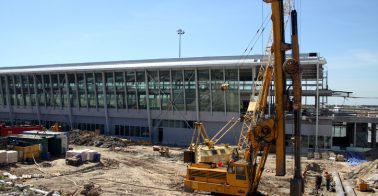
Maybe It’s Not The Electrician’s Fault?


When the project timeline keeps getting pushed back, and the budget’s been blown and profit margins shrunk, the finger pointing starts—and often they’re aimed at electrical. Afterall, wasn’t the electrical crew the first to arrive and the last to leave? If this is a familiar story, it may be time to dig into root causes—and those are likely related to flaws with decision making and communication across the lifespan of the project.
Decisions, Decisions…
Although electrical contractors tend to get a lion’s share of the blame for delays, lots of the snags they hit are actually related to problems that happened way ahead of their work. In fact, as Veselina Lezginov of Arrow Electric observes at For Construction Pros, many if not most challenges stem from lack of timely and clear decision making across the project:
- A panel shows up and doesn’t fit. A device gets set in the wrong place. Somebody has to cut into finished drywall to re-pull a circuit that should’ve been right the first time.
- None of that is really an electrical failure, though. Most of it goes back to something that happened weeks earlier — a drawing that never got locked down, a sequencing call, an order that went in late — made by people nowhere near the jobsite.
- Every problem covered here traces back to the same root cause: a decision that was made too late or was never made at all. None of it is really about electrical work. It’s about whether the people setting the schedule, releasing the equipment and locking the drawings are moving at the same pace as the people installing against them.
The fix, according to Lezginov, is a project team that’s “willing to make the hard calls on coordination deadlines, procurement dates, sequencing decisions early enough that the field is executing a plan instead of reacting to one.” Specifically, for improved project management (and thus the smoother flow of electrical work), consider these practical checkpoints:
- Lock MEP coordination models on a fixed calendar date tied to the procurement schedule, not just to the start of rough-in. Treat that date as a real deadline, not a target.
- Route every RFI answer to every trade working in the affected area, not only the trade that submitted the question, so field conditions don’t diverge from the current drawing set.
- Sequence ceiling and wall trades against confirmed mechanical elevations and hold that sequence even when another trade is ahead of schedule and pushing for early access.
- Release long-lead electrical equipment (switchgear, transformers, gear lineups) at or near contract award, verified against current OEM lead times rather than historical norms.
- Start utility service applications and interconnection coordination during preconstruction, not after the crew mobilizes.
- Build inspection and commissioning milestones into the master schedule as dependencies with float, not as a step requested once the work is already complete.
Good To Do: Encourage Early Communication of Problems
In construction, misunderstandings are frequently found at the roots of cost overruns, project delays and dissatisfied stakeholders. However, “improving communication,” is not about scheduling more training and meetings, or adding to reporting procedures. Instead, try shifting the expectation that “polished updates and complete answers” are the norm, and focus instead on rewarding early identification and communication of potential problems. As Well Built Construction underscores: “The difference between a manageable issue and a major disruption is rarely the problem itself. It’s when it gets communicated and dealt with.”
Specifically, construction business leaders will find it helpful to remember that effective teams don’t wait until there is full clarity and a clever power point deck to detail a challenge: “They invite questions and ideas and potential solutions. They don’t shoot them down….This type of communication doesn’t eliminate risks and issues altogether, but it does give teams time to manage them. That’s the biggest difference….”
Think Strategically About Your Bonding Needs Too…
Why wait until you have a pressing deadline for a big win? Plot your way forward strategically with the bonding programs at Colonial Surety Company. We are a national, direct, and Treasury-Listed surety bond writer that’s been in business since 1930, and we are proud to help construction companies of all sizes improve bidding capacity and demonstrate reliability.
Our Hometown Bond Program provides local builders with credit based underwriting bonds for up to $500k, preparing you to qualify for The Partnership Account® for Contractors.
Once qualified for The Partnership Account®, you’ll leverage benefits that give your business a competitive edge, including: a written surety line of credit for up to 20 million single, and 40 million aggregate. Plus, you’ll:
- Issue your own Bid Bonds Instantly using our powers of attorney. Performance and payment bonds are speedier and easier than ever too.
- Gain Real-Time Visibility: Use your private dashboard to view your underwriting profile and insightful financial data in real-time.
Put your business on a growth path with a few clicks, now:
Bonding Programs at Colonial Surety Company
In business since 1930, Colonial Surety Company is a leading direct seller and writer of surety bonds and insurance products across the USA. Colonial Surety Company is rated “A Excellent” by A.M. Best Company and U.S. Treasury listed. Let’s connect today: Colonial Surety Company.