In Demand: HVAC for the AI ERA
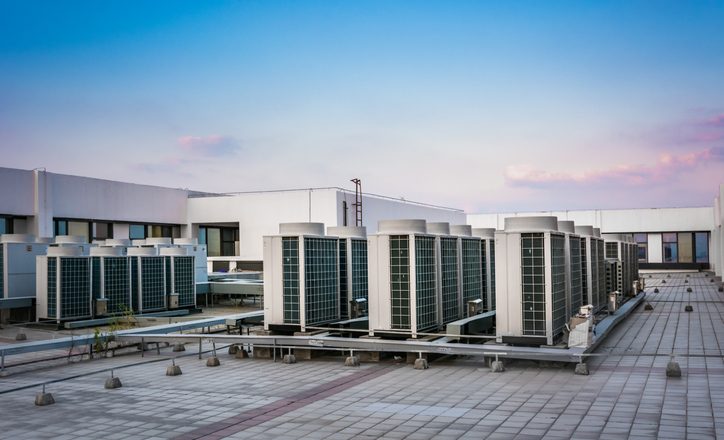
AI requires a massive physical skeleton, and, the tech giants rushing to house the immense processing power required for modern LLMs, are hitting a bottleneck that silicon alone cannot solve: a surge in demand for the skilled trades, especially Heating, Ventilation and Air Conditioning (HVAC) professionals. Afterall, colossal, heat-intensive data centers are only as functional as their cooling systems.
The AI Infrastructure Bottleneck
To say the least, data center builds are sparking demand for HVAC professionals. It’s even plausible to consider, for example, that in the AI revolution, the most “essential workers” are those building the spaces where the “intelligence” lives. At Construction Dive, Joe Burns reports:
- The rapid scaling of data centers and digital infrastructure in the United States is exacerbating challenges in hiring skilled labor, according to a report by Randstad North America.
- It’s now more time-consuming to hire an HVAC professional and an electrician than a software developer, the report says. The average hiring time for a skilled worker is 56 days, compared to 54 days for a tech worker.
- “While much of the conversation surrounding AI focuses on job displacement, we’re overlooking the demand it’s creating for the skilled trade workforce,” Greg Dyer, chief commercial officer of Randstad North America, said in a statement. “AI can’t build data centers, upgrade power grids, or maintain its own infrastructure.”
- “Leaders must reposition skilled trades as a top-tier career track,” the report says. “Leaders must prioritize investments in education, upskilling, and training.”
The rising demand for skilled labor in general, and HVAC professionals in particular, makes it ever more critical for construction business owners to pursue new avenues for recruiting and retaining employees. The demand is unlikely to shift any time soon. The dollars projected for the AI infrastructure buildout are mind blowing: “Credit ratings agency Moody’s now projects $3 trillion in global spending over the next five years to keep pace with rapid data center expansion and AI capacity demand.”
Data Centers, Tangential Buildouts–and Schools!
Examining the opportunities at hand for the construction industry, Matthew Thibault observes that it’s not only the big players winning giant data center contracts that can come out on the winning side of the AI infrastructure buildout, noting: “While some builders will leverage the boom into lucrative construction contracts to manage the work, other firms can get in on the infrastructure, the power plants, the roads and a plethora of other tangential buildouts needed to support the work.” At the Associated General Contractors of America, Macrina Wilkins, senior research analyst concurs, underscoring that opportunities for smaller builders are on the rise too: “As the U.S. works to expand grid capacity to support energy-intensive AI workloads, a significant share of related work is occurring around the data center rather than within the building footprint, creating opportunities for smaller, civil, utility and specialty firms to participate.”
In the drive for data center construction, businesses looking to get in on more hometown action will do wise not to lose sight of efforts to modernize outdated public school buildings around the country. For example, the Government Accountability Office has estimated that it will take $1.1 trillion to “modernize and replace” outdated school buildings. Professionals at Strategic Partnerships remind us that most of this funding is coming from state and local budgets, as school districts “issue voter-approved bonds to pay for large-scale projects such as new buildings, equipment upgrades and sports facilities.” Experts also point out that school construction, like data center construction, requires HVAC expertise. Healthy schools rest on three legs:“wellness, as it relates to a building’s programming and circulation; air quality, ventilation, and lighting; and sustainability that focuses on the building’s envelope and energy sourcing.” Indeed, in the past five years, HVAC improvements in schools have gained a whole new level of importance.
Ready To Get Growing?
Colonial Surety Company has programs for builders of every size. We’re national, direct, digital bond writers (with experts who answer the phone). Say goodbye to painful and old-fashioned approaches to surety bonds, and get your company on a growth track with us behind you.
For Bonds up to $500K: Use our Hometown Bond Program. It is credit-based, with no financial statements required.
For Larger Bonds: Get armed with single and aggregate bonding limits, in writing, and even issue your own instant Bid Bonds, via The Partnership Account® for Contractors. Seasoned contractors are invited to pre-qualify for a surety bonding line of credit for up to 20 million single, and 40 million aggregate. Receive free financial scores just for completing our easy pre-qual.
Surety Bond programs for construction businesses of every size are a few clicks away:
Bonding Programs at Colonial Surety Company
Founded in 1930, Colonial Surety Company is a leading direct seller and writer of surety bonds and insurance products across the USA. Colonial is rated “A Excellent” by A.M. Best Company and U.S. Treasury listed. Let’s connect today: Colonial Surety Company.