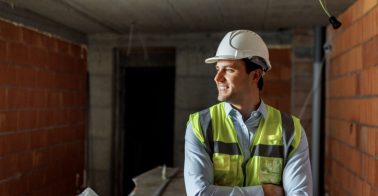
Considering Public Builds?


Secured With Tax Revenues, Bonds or Grants
Public builds come in all shapes and sizes. From the local library or school district, to the county hospital system, statewide transit and utility agencies, and on up to federally funded infrastructure builds, big and small publicly funded projects are getting underway all the time. As Madi Jerome explains at Construct Connect: “The funding sources for public builds may come from “tax revenues, bonds, or grants,” and “the procurement process is governed by formal laws and procurement codes.” Examples of public projects include:
- Transportation and civil infrastructure – highways, bridges, roads, transit, airports, water and wastewater systems.
- Water, power, and grid upgrades – substations, transmission lines, distribution networks, and resilience projects supporting data centers and manufacturing growth.
- Institutional and civic buildings – K–12 schools, higher education buildings, courthouses, public safety facilities, and some hospitals and clinics.
- Security and defense campuses – such as NGA West, a 97acre campus with a main operations building, utility plant, parking garages, visitor control center, and secure access points, all delivered under tight security and performance requirements.
When weighing the choice between public and private construction projects, business owners often focus on the obvious differences like tighter competition and slower payments in the public sector. However, a crucial, often overlooked advantage of publicly funded work is the financial security it offers. While private projects might be more relationship-driven and offer the potential for higher margins and quicker payment, they also come with a significant catch: owners carry more market risk. Public projects, conversely, generally come with a much lower credit risk once the work is accepted and funds are disbursed, offering a stabilizing force and peace of mind that can be invaluable to a growing construction firm.
Running A Sustainable Construction Business
When choosing to bid, be careful not to get so caught up on winning that you lose sight of your ultimate goal: running a consistently successful construction business. Be sure, for example, to put the time into fully understanding each project you bid on, and that includes weighing the risks. Johnny Bradigan at Construct Connect, urges about assessing risks before finalizing a bid:
Discovering and taking care of risks may be the most overlooked part of preparing a bid. If you’ve found potential risks, you need to study each….Consider how dangerous the risk is and the impact it can have on the project. If the risk doesn’t seem too likely to happen or would have a low impact on progress, it might be easy to take care of. However, a risk that could become a reality and seriously affect the job could hurt your profits.You will be a much better bidder if you can identify the risks connected to a project. It will also make you better prepared to handle a situation when something goes wrong.Starting…early means you can avoid bidding on projects that won’t make you a profit. It can help you make more accurate bids and contingency budgets, too. Project management will run smoother, and you’ll save time, money, and resources as work progresses.
In addition to proactively assessing risks when preparing a bid, avoid the trap of “winning” with the lowest bid. Doing so can actually turn out to be a losing proposition for your business over time. At Well Built Construction Consulting, Chad Prinkey advises strategically positioning your business to win more and better projects: “As a growing company, you’re never going to win work consistently if hiring your firm is cost prohibitive. I’ll shoot you straight, though: If your sales approach boils down to “be the lowest qualified bidder,” you might as well add “fingers crossed” as an official step in your sales process. The low bidder won’t always win the day, and if you’re only winning when you’re low, you are leaving a ton of business and profit on the table.”
Bid Bonds, Surety Bonds, Performance Bonds?
In construction, surety bonds are more than mere paperwork; they’re a testament to your financial stability and commitment to completing projects. Colonial Surety Company helps construction companies of all sizes improve bidding capacity, and demonstrate reliability. Our Hometown Bond Program provides local builders with credit based underwriting bonds for up to $250k—no financial statements required.
Got something bigger in mind? No problem. We’ve got something special for you too.
Receive Free Business Credit Scores instantly, just for submitting an easy, speedy Pre-Qual for a surety line of credit in writing. Once qualified, welcome new projects in, as you leverage all the benefits of The Partnership Account® for Contractors, including:
- Written Bonding Limits: Receive your single and aggregate bonding limits in writing.
- Instant Bid Bond Issuance: Gain the ability to issue your own bid bonds within minutes, using our powers of attorney.
- Real-Time Visibility: Use your private dashboard to view your underwriting profile and insightful financial data in real-time.
Surety Bond programs for construction businesses of every size are right here:
Bonding Programs at Colonial Surety Company
Founded in 1930, Colonial Surety Company is a leading direct seller and writer of surety bonds and insurance products across the USA. Colonial Surety Company is rated “A Excellent” by A.M. Best Company and U.S. Treasury listed. Let’s connect today: Colonial Surety Company