From Office to Home: Conversion Construction
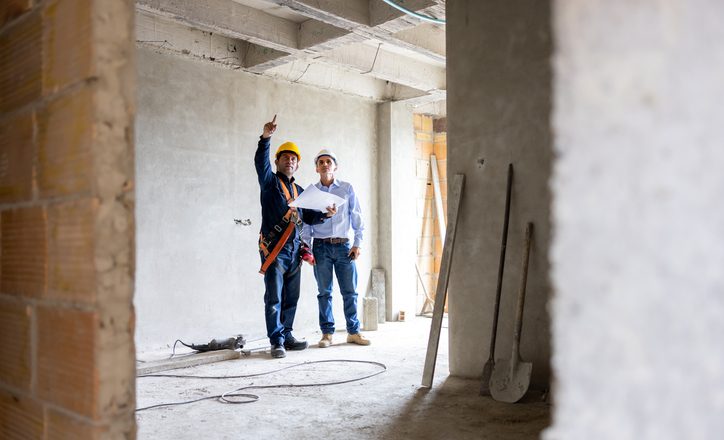
Remember 2020? We left office buildings behind, bunkered down at home, and waited for COVID-19 to pass, so that things could go back to normal. After a while, it dawned on us that there was really no going back, and we forged forward in search of new norms. Meanwhile, office buildings were empty, if not all the time, at least some of the time, and have remained so, as many companies find they no longer need to maintain such large footprints. On the other hand, we cannot seem to get housing built fast enough across the country. Enter the promising work of converting offices to homes. Read on for examples of the conversion construction that’s got some builders racing toward deadlines.
1600 New Housing Units At Pfizer’s World Headquarters?
In 2023, Pfizer left its 1961 office tower on East 42nd Street in New York City behind, and moved to a more modern base at swanky Hudson Yards, where employees on hybrid schedules have unassigned seating and collaborative workspaces. The old office space has been vacant, but anyone visiting the area these days can see it’s abuzz with construction. As Bloomberg reports, it’s undergoing the largest conversion of office space to housing units in the United States:
Roughly two blocks from Manhattan’s Grand Central Terminal, construction workers are stripping down the former Pfizer Inc headquarters to its columns, beams and concrete slabs. The office towers are expected to be turned into roughly 1,600 rental units rife with amenities, such as a rooftop pool and fitness center. For now, contractors are pouring a new floor every four days to try to meet the 2026 opening. The developers, Metro Loft and David Werner Real Estate Investments, are tackling the biggest conversion project in the U.S.
Reporting for Construction Dive, Joe Burns explains that in New York City, zoning changes, as well as “shifting financial conditions and housing shortages” are accelerating office conversion builds:
Changes in zoning policy are helping to boost office-to-residential conversion activity in New York City, with annual conversions growing from 1.6 million square feet in 2023 to 3.3 million in 2024. Through August 2025, 4.1 million square feet of conversions have started, surpassing all of 2024, according to a Cushman & Wakefield report. This shift is taking place as New York City faces historically-elevated office vacancy rates, which peaked at 23.8% in June. Vacancies decreased slightly, to 22.3%, in August, but they remain more than double the pre-pandemic five-year quarterly average of 9.4%, the C&W report says. Office valuations have also deteriorated, falling from a peak of $1,037 in 2019 to $567 this year, helping conversions, the report says.
According to Construction Dive, New York City is far from alone in the press to repurpose buildings once dedicated to work: “The popularity of office conversions is increasing across the U.S. as building owners repurpose vacant space….Conversions, alongside demolitions, will reduce U.S. office inventory more than new office space deliveries will add to it this year, which should help reduce vacancies and support market recovery….” Examples of offices being rebuilt into homes can be found across the country, including in Arlington, Virginia, Chicago Illinois, Cleveland, Ohio, and Scottsdale, Arizona. Some of these projects, such as the Ames Center in Arlington, Virginia, are taking a mixed-use approach to rethinking space formerly dedicated to offices:
Snell Properties is in the process of redeveloping 1820 Fort Myer Drive, currently home to the Ames Center office building, into a mixed-use site with two residential towers totaling 740 units, including an affordable component. The property, originally developed by Snell in 1966, is next to the Rosslyn Metro station, and within a short distance of two bridges across the Potomac River into downtown Washington, D.C. The redevelopment plan also calls for commercial and office space, a 225-room hotel and the reconstruction of a church and gas station currently located on the site.
Using Resources Wisely?
Pursuit of new possibilities requires leveraging all available resources–and partners. That’s why Colonial Surety Company invites contractors across the country to qualify for The Partnership Account®.
Get your free financial scores just for completing the brief pre-qualification.
Once qualified for The Partnership Account® for Contractors, you’ll use our power of attorney to issue your own bid bonds, in minutes. Order performance and payment bonds with speed and ease too, and run your business more efficiently and competitively than ever as you leverage your:
- surety line of credit—in writing.
- private digital dashboard.
- daily snapshot of single and aggregate limits
- ability to update work on hand
Colonial Surety Company helps smaller contractors’ level up too. Try our Hometown Bond Program, which offers local builders credit based underwriting bonds for up to $250k—no financial statements required.
Surety Bond programs to help construction businesses of every size get growing are right here: Bonding Programs at Colonial Surety Company
Founded in 1930, Colonial Surety Company is a leading direct seller and writer of surety bonds and insurance products across the USA. Colonial is rated “A Excellent” by A.M. Best Company and U.S. Treasury listed. Let’s connect today: Colonial Surety Company.