Beyond a Will: Keeping Your Digital Accounts Accessible
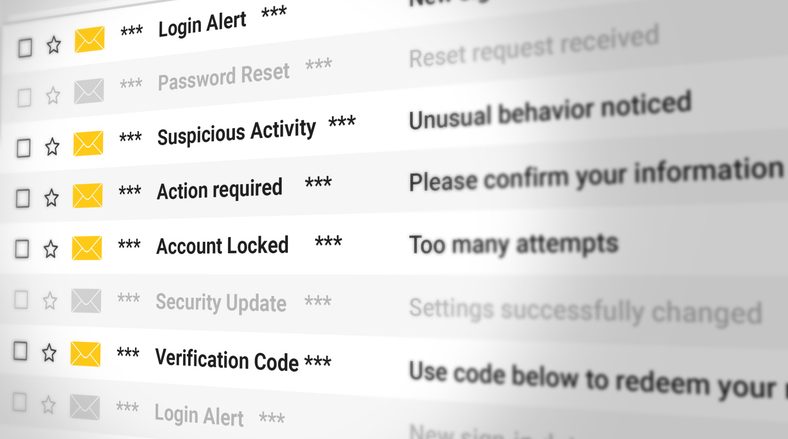
Even the most organized and conscientious among us is likely to leave extra financial and administrative stress behind us when we die. Think about it: even if you have been diligent with organizing your debts and assets, setting up a will and trust, and appointing one or more fiduciaries (like an executor and or trustee) to carry out your wishes, how will anyone actually access your online accounts? And, aren’t most of your accounts online at this point? Read on for must-do’s when it comes to estate planning in our digital era.
Beyond Account and Password Info
While it is a terrific step forward if you actually have tucked away a list of your accounts and password information (and told your designated fiduciary where to find it), that’s no longer actually enough to be helpful upon your death. These days, for example, most bank accounts will text a code to the phone of the account holder as part of the standard log in process. Uh-oh–when you die, you can’t actually use your fingerprint or face recognition to get that code—and it’s not a movie, so your son or daughter probably won’t be able to bypass those steps either. And, then, they’ll find out that the recovery phone was a landline that no longer exists. Ditto an old email account. Now what? More stress and more problem solving–in what is ordinarily a difficult and grief filled time in the first place.
Cautioning that administration challenges in the digital age are an overlooked gap for families during estate planning, Pickel Law points out: “Digital accounts are only as accessible as the most current version of every linked email address, phone number, and device. If your estate plan does not track those, it is already out of date before it is ever needed.” To avoid leaving difficult and time consuming tangles behind, go beyond hiding a notebook with account info. Here are some of the practical steps Pickel Law recommends for solid estate planning in our digital era:
- Go through your accounts (financial, email, cloud storage, and any platforms that hold business or legal records) and for each one, write down which phone number, email address, or app receives the two-factor verification code. That chain of linked access is what your family will need….
- Check the recovery contacts on your email accounts. Many people have phone numbers or backup email addresses connected to those accounts that they set up years ago … .If those contacts are out of date, the accounts attached to them are already unreachable.
- Most platforms with two-factor authentication allow users to create a set of one-time backup codes. Print them, store them securely offline, and make sure the person who will manage your estate knows where to find them.
- A will should include explicit provisions giving your executor authority over digital assets and specifying where the access information is stored. Without those provisions, your executor may face unnecessary legal obstacles….
At Fidelity, financial professionals further underscore the importance of taking an inventory of digital assets seriously, noting:
It has become the norm to store financial records in smartphones, computers, or the cloud, and to conduct financial transactions electronically. In addition to email and social media accounts, most people also own a trove of digital assets, which can include:
-
-
- Bitcoin, Ethereum, and other cryptocurrencies
- Non-fungible tokens (NFTs)
- Domain names for websites
- Digital photos and videos
- Digital rights to literary, musical composition, motion picture, or theatrical works
- Digital accounts in an online betting account
- Blog content
- Airline miles, hotel points, or any other transferable rewards programs
- Online video channels where the content is monetized and producing an advertising revenue stream for its owner
- Online gaming avatars that offer online goods or services that may be worth real-world money
-
Helpful To Know: Accessing Digital Assets After A Death?
At some point, most families are likely to find themselves frantically trying to login to accounts using the credentials of the deceased, though attorneys remind us that is is usually prohibited and it’s best to take the legal approach: “The right approach is to go through each platform’s official deceased account process: presenting a death certificate, a copy of the will, and letters establishing legal authority.”
Fiduciary and Estate Bonds Explained
Frequently the representatives appointed to administer estate plans, such as executors, digital executors, personal representatives, or trustees are required to obtain fiduciary bonds, which are sometimes generally referred to as estate bonds.
The purpose of an estate bond is to guarantee that assets will be properly handled in accordance with the estate plan, and in keeping with state laws and protocols. An estate bond is sometimes alternatively named specifically based on the role of the fiduciary. For example, an estate bond may be referred to as a trustee, executor, personal representative, guardianship or conservator bond.
Colonial Surety Company makes it quick and easy to obtain estate bonds of all kinds. A user-friendly online service allows you to quote and obtain a bond that is instantly available to download or e-file. Fiduciaries in every state can efficiently obtain their estate bonds here:
Estate Law Practice?
Estate planning attorneys can efficiently help clients secure court and fiduciary bonds with a few clicks on The Partnership Account® for Attorneys.
Just select the bond needed, send it to your client for payment, and then download, e-file or print the bond. Our fiduciary bonds include: administrator, estate, executor, guardian, personal representative, probate, surrogate, trustee, conservator and the list goes on. Court bonds include: appeal, supersedeas, injunction, replevin, receiver and more.
Sign up is free and fast. Get needed estate bonds in minutes, right here: The Partnership Account® for Attorneys.
In business since 1930, Colonial Surety Company is rated “A Excellent” by A.M. Best Company, U.S. Treasury listed, and licensed for business everywhere in the USA. Our customers have awarded us a 4.8 Trustpilot score. Whenever and wherever you need a bond, trust Colonial Surety Company www.colonialsurety.com